Guide
Master Aquafaba for Perfect Vegan Meringues and Mousses
Aquafaba, the viscous liquid from cooked chickpeas, is a powerhouse of plant-based culinary chemistry. By understanding its protein and starch composition, you can create stable foams, silky mousses, and crisp meringues with ease.
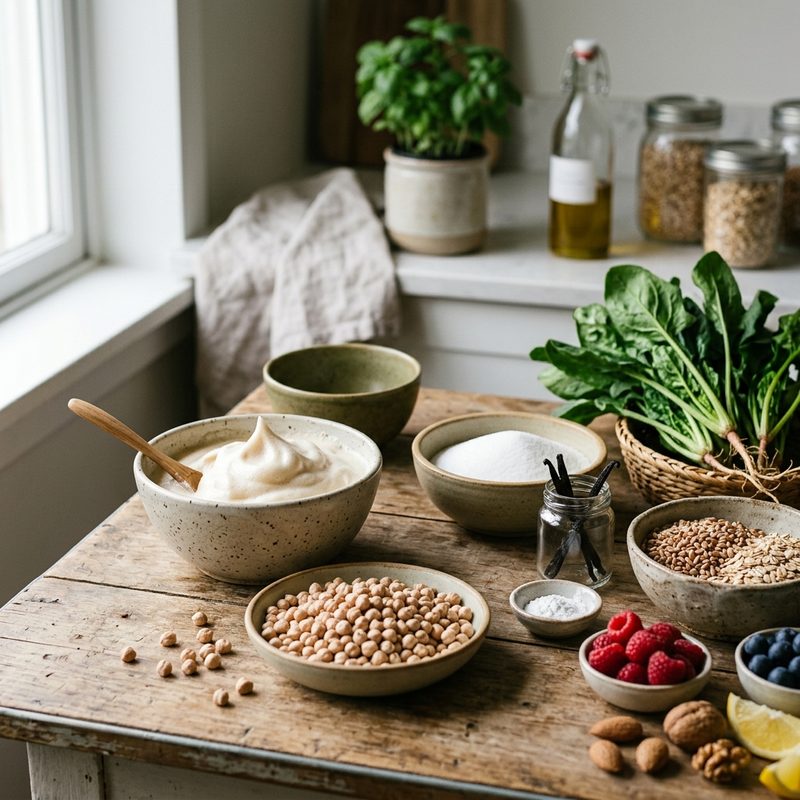
Sourcing the right liquid is the first step to achieving professional results in your vegan kitchen. While canned chickpea water is ready to use, home-cooked liquid requires reduction to concentrate the proteins. This process ensures your foam remains stable and airy, creating the perfect base for various vegan desserts.
Sourcing and Reducing the Liquid
The highest quality aquafaba comes from canned chickpeas, as the liquid has been concentrated during the commercial cooking process. If you are using the liquid from home-cooked chickpeas, you must simmer the liquid on the stove until it reaches a consistency similar to egg whites. This reduction is vital because it increases the concentration of proteins and saponins—the natural compounds that allow the liquid to trap air bubbles. Without this concentration, your foam will be watery and prone to immediate collapse.
The Importance of Grease-Free Equipment
Before you begin, wipe your mixing bowl and whisk attachment with a bit of lemon juice or white vinegar. It is essential that no trace of fat or oil remains on your tools. Fats interfere with the protein strands as they attempt to knit together; even a tiny smear of oil from a previous recipe will prevent the aquafaba from ever reaching stiff peaks.
Initial Whipping and Aeration
Pour the cold chickpea liquid into your bowl. Start your electric mixer on medium-low speed. This slower start creates a stable network of small, uniform bubbles rather than large, erratic ones. As the liquid turns from a translucent yellow to a foamy white, gradually increase the speed to high. This process requires patience; aquafaba typically takes five to ten minutes to reach full volume, which is longer than animal-based counterparts.
Stabilizing the Structure
Once you reach soft peaks, add 1/8 teaspoon of cream of tartar. This acidic ingredient is the most important part of the technique because it lowers the pH of the mixture, allowing the protein molecules to bond more tightly. If you are making a sweetened dish, add superfine sugar one tablespoon at a time while the mixer is running. The sugar dissolves into the water and creates a syrupy film around the air bubbles, preventing them from bursting and resulting in a glossy, stable meringue.
Testing for Stiff Peaks
Stop the mixer and lift the whisk. The aquafaba is ready when the peak stands straight up without drooping. For a protein note: while aquafaba is prized for its structural properties, it contains only trace amounts of protein compared to the chickpeas themselves, so it is used here for texture rather than as a primary nutritional source. Once peaks are stiff, you can fold it into melted dark chocolate for a mousse or pipe it onto a baking sheet for meringues.